
Key Takeaways:
- DIN-rail industrial computers mount directly onto standard DIN rails, typically inside control cabinets. They are well suited for compact, distributed, and machine-level computing.
- Common applications include industrial automation, edge computing, Industrial IoT, machine vision, and data acquisition.
- Key selection factors include performance, form factor, I/O, expansion, thermal design, environmental conditions, and lifecycle.
- DIN-rail PCs are not always a replacement for larger industrial PCs. The right choice depends on the application's performance and expansion requirements.
DIN-rail industrial computers provide compact, reliable computing for control cabinets, machines, and space-constrained industrial systems. But what is a DIN-rail industrial computer, and when should you use one? This guide covers the key benefits, applications, and selection criteria to help you choose the right DIN-rail PC for your system.
What Is a DIN-Rail Industrial Computer?
A DIN-rail industrial computer is an industrial PC designed to mount directly onto a standard DIN rail, typically inside a control cabinet or electrical enclosure. DIN rails are commonly used to mount industrial components such as PLCs, I/O modules, power supplies, and networking equipment. A DIN-rail PC can be installed alongside these components as part of the same system.
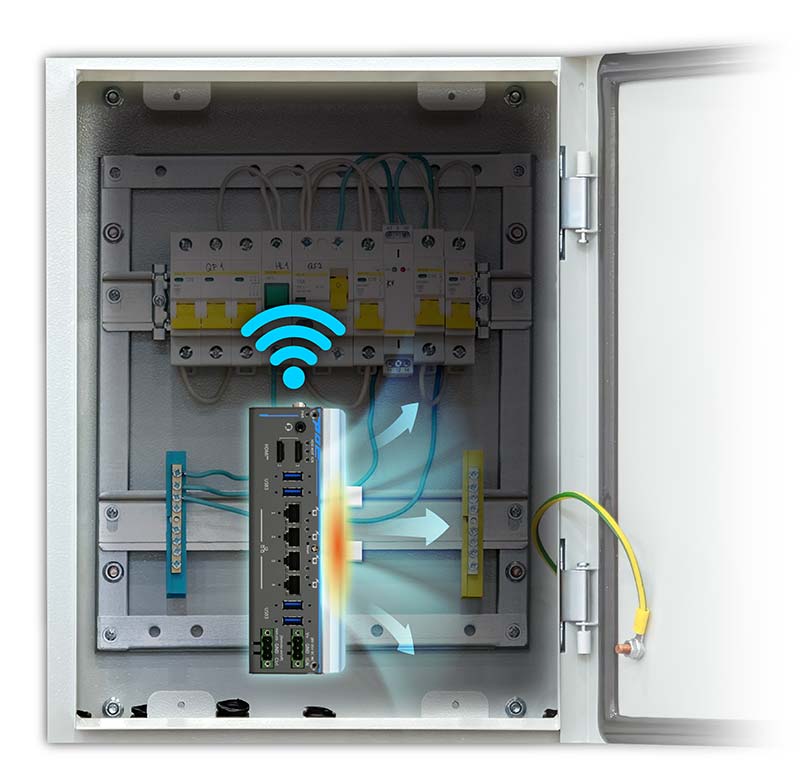
Unlike traditional industrial PCs that may require a dedicated mounting surface, DIN-rail industrial computers are designed for compact installation and machine-level integration. Common applications include:
- Industrial automation
- Machine control
- Edge computing
- Data acquisition
- Machine vision
- Smart manufacturing
Benefits of DIN-Rail Industrial Computers
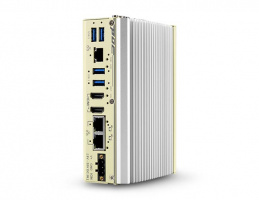
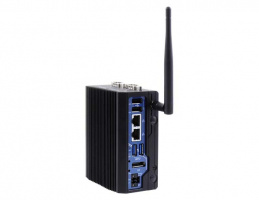
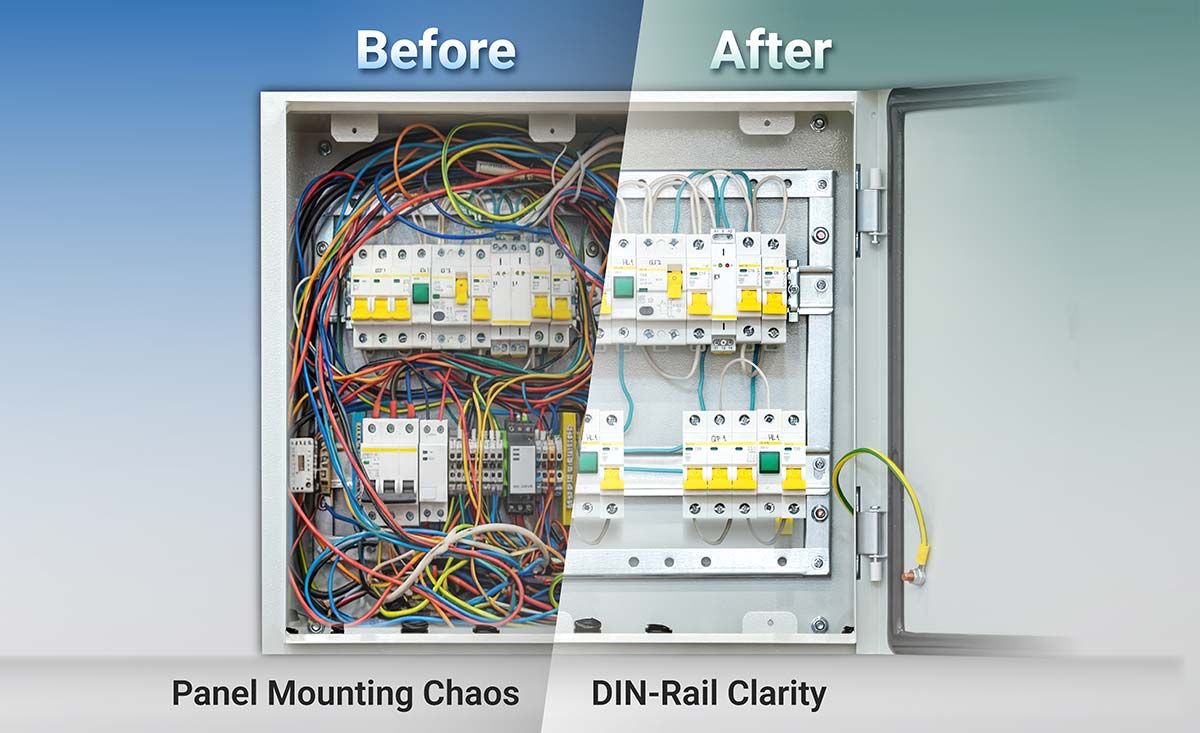
1. Save Space in Control CabinetsControl cabinets often have limited space for PLCs, I/O modules, power supplies, networking equipment, and computers. A DIN-rail industrial computer mounts directly onto the existing rail, eliminating the need for a separate mounting surface. An ultra-compact design can further reduce the system footprint and simplify cabinet layout. A representative example is the POC-600, an ultra-compact DIN-rail industrial computer designed for space-constrained industrial applications where minimizing system footprint is a priority.
2. Enable Machine-Level Edge ComputingA DIN-rail PC can process data close to the source—such as sensors, cameras, and machines. Local processing can reduce data sent to centralized servers or cloud platforms while supporting faster analysis and decision-making. Typical applications include:
- Machine data acquisition
- Industrial IoT gateways
- Predictive maintenance
- Energy monitoring
- Machine vision
- Edge analytics
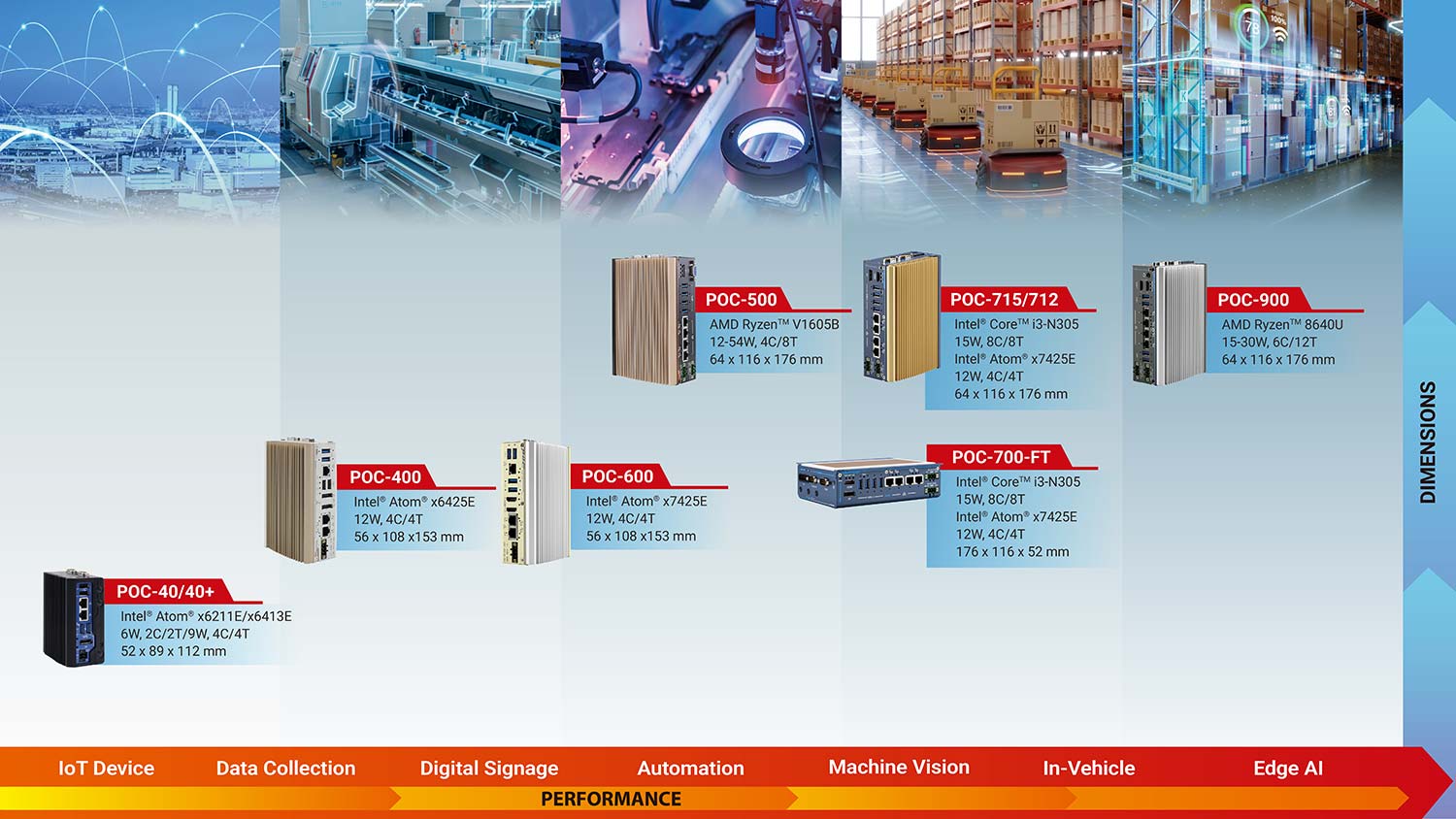
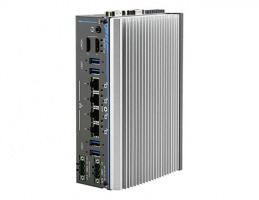
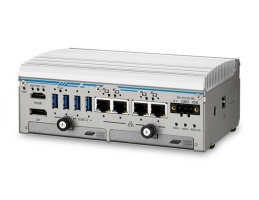
For applications that require higher computing performance while maintaining a compact DIN-rail form factor, the POC-900 provides a higher-performance platform for industrial edge computing.
3. Simplify System IntegrationA DIN-rail industrial computer can be installed alongside other industrial control components, creating a more organized system architecture. This can simplify system layout, cable routing, installation, and maintenance. Fanless designs can further reduce maintenance by eliminating moving parts such as cooling fans.
4. Balance Performance, Size, and I/O
A compact industrial computer does not necessarily mean limited performance. Modern DIN-rail PCs can support workloads ranging from industrial automation and data acquisition to machine vision and edge AI.
When selecting a platform, consider both computing performance and the I/O required by the application, such as Ethernet, USB, serial ports, digital I/O, or PoE.
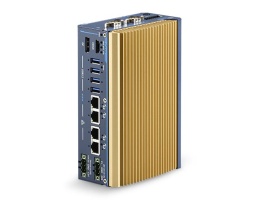
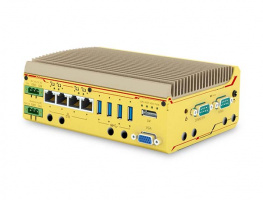
I/O flexibility can be especially important when different applications require different connectivity. For example, the POC-700 supports MezIO modular I/O, allowing system integrators to adapt the I/O configuration to specific application requirements.
What Are DIN-Rail Industrial Computers Used For?
DIN-rail industrial computers are commonly used when computing needs to be located close to machines, sensors, or industrial equipment.
- Industrial Automation: Work alongside PLCs and I/O systems for data processing, communication, monitoring, and control.
- Industrial IoT and Edge Computing: Collect and process industrial data locally before sending it to centralized systems or the cloud.
- Machine Vision: Process image data from industrial cameras for inspection, measurement, and automation.
- Smart Manufacturing: Support local data processing and analytics across connected production equipment.
- Data Acquisition and Monitoring: Collect data from sensors and equipment for monitoring, analysis, and system optimization.
Across these applications, the common requirement is compact installation with local computing capability.
DIN-Rail Industrial Computer vs. Traditional Industrial PC
DIN-rail industrial computers and traditional industrial PCs are designed for different system architectures.
| DIN-Rail Industrial Computer | Traditional Industrial PC | |
| Mounting | DIN rail inside a control cabinet | Wall, machine, or rack |
| Cooling | Mostly fanless | Often actively cooled |
| Performance Range | Low to mid-range edge performance | Mid- to high-performance |
| Expandability | Limited | Highly flexible |
| Power Consumption | Low | Typically high |
| Typical Applications | Distributed control and edge computing | Centralized control and data processing |
Choose a DIN-Rail Industrial Computer When:
- Space is limited
- The computer needs to be installed inside a control cabinet
- Computing needs to be distributed across machines
- Local edge processing is required
- A compact and fanless platform is preferred
- High-end computing performance is required
- Multiple PCIe expansion cards are needed
- A dedicated GPU is required
- Extensive internal expansion is needed
- Centralized computing is preferred
These architectures can also work together. A larger industrial PC can handle centralized, high-performance workloads, while compact DIN-rail computers provide local data acquisition, communication, and edge processing closer to individual machines.
How to Choose a DIN-Rail Industrial Computer?
The right DIN-rail industrial computer should match both the workload and the operating environment.
| Category | What to Consider |
| Performance | CPU performance, workload type (automation, AI inference, machine vision, edge analytics) |
| Form Factor | Cabinet space, dimensions, mounting method, cable routing, clearance |
| I/O & Connectivity | Ethernet, USB, serial ports, digital I/O, PoE, and application-specific interfaces |
| Expansion | Need for modular I/O or additional system expansion |
| Thermal Design | Ambient temperature, workload intensity, enclosure airflow, fanless vs. active cooling |
| Environmental Conditions | Shock, vibration, dust, humidity, and installation environment |
| Lifecycle & Reliability | Product availability, industrial-grade design, long-term support, and lifecycle management |
Neousys DIN-Rail Industrial Computers
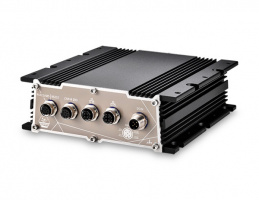
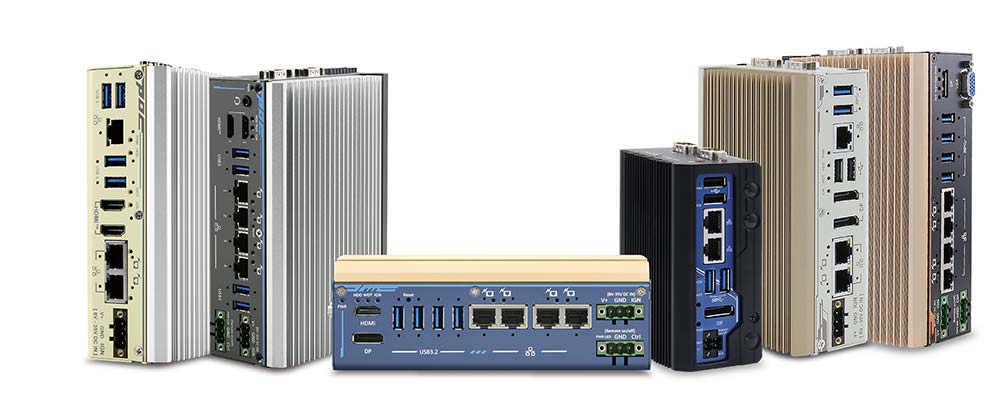
Neousys offers Neousys DIN-Rail Industrial Computers designed for different performance, I/O, and space requirements. The POC-900 is suited for higher-performance compact edge computing. The POC-700 provides flexible I/O through MezIO modular I/O, while the POC-600 is designed for ultra-compact industrial computing in space-constrained environments.
Whether you prioritize performance, I/O flexibility, or compact size, choose a platform based on your application's specific requirements.