
Overview
Undoubtedly the task of deploying a self-driving shuttle into an existing public transport system on public roads can be regarded as a major challenge for contemporary automated driving systems.
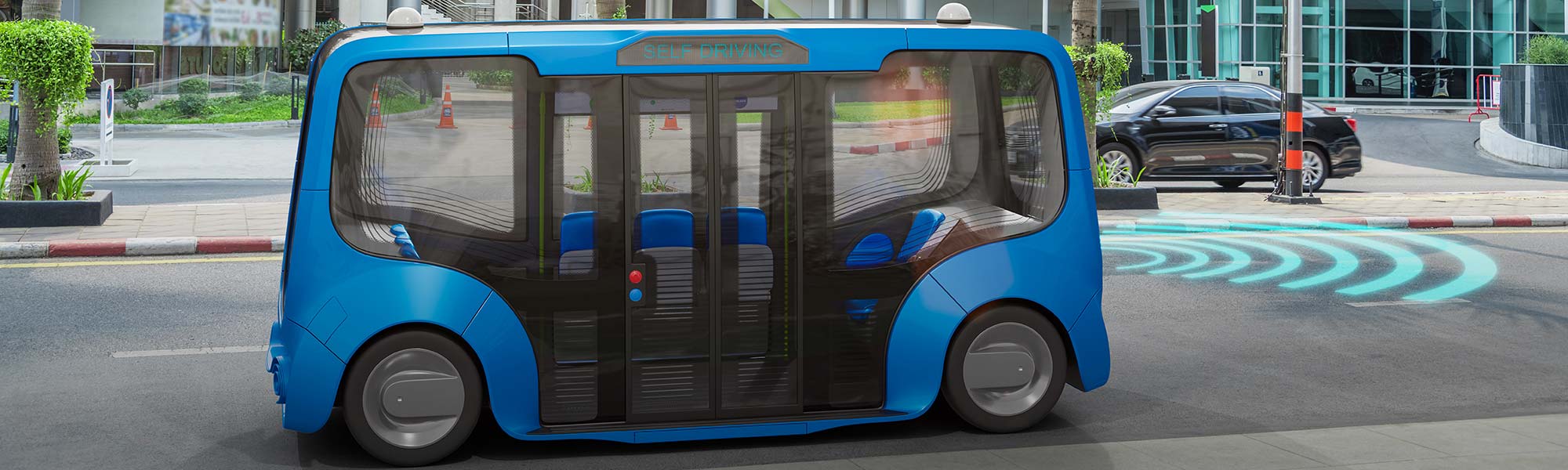
A manufacturer demonstrated a self-driving e-shuttle bus connecting A and B, a 15 km long route, while operating at velocities up to 70 kmh in real traffic. The shuttle was tested on-road for four weeks with real passengers, the tests proved the shuttle’s capabilities and provided insights on future developments. The self-driving shuttle bus system is based on the Robot Operating System and the Automotive Data and Time-Triggered Framework, and to ensure reliable operation in diverse conditions, a redundant sensor concept with Global Navigation Satellite System (GNSS), LiDAR, Camera and Radar is introduced.
Challenges
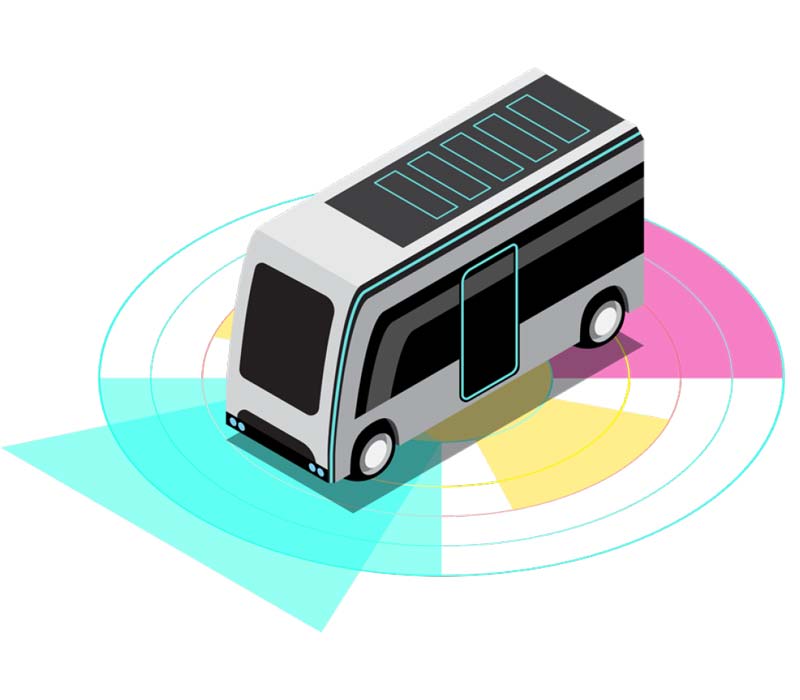
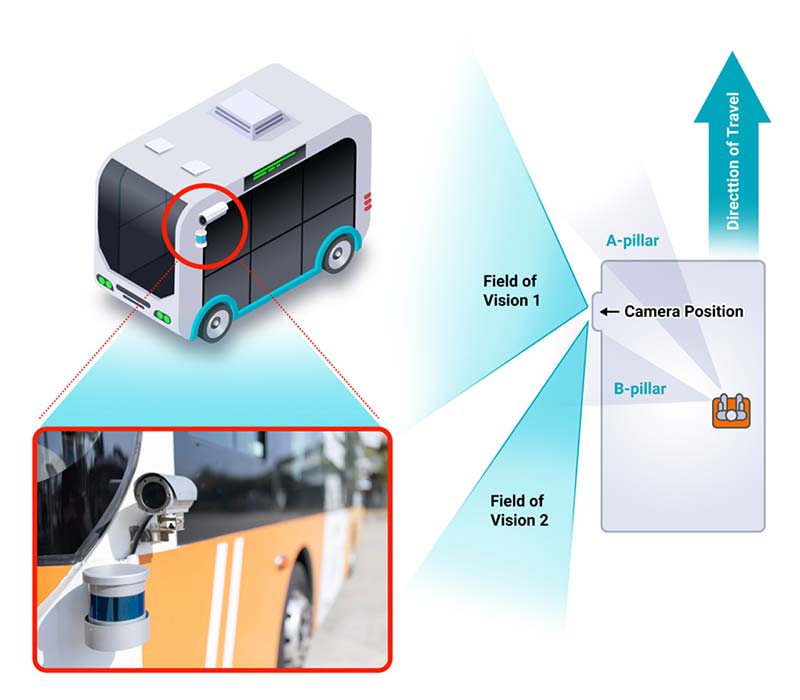
Due to the complexity of the autonomous vehicle application, it may require several computers to accommodate all cameras and sensors surrounding the vehicle.
The system comprises a redundant design, an exact system backup in case one fails. The multiple systems must be online simultaneously and initiate a seamless handover when needed. This demands efficient and powerful systems to be deployed.
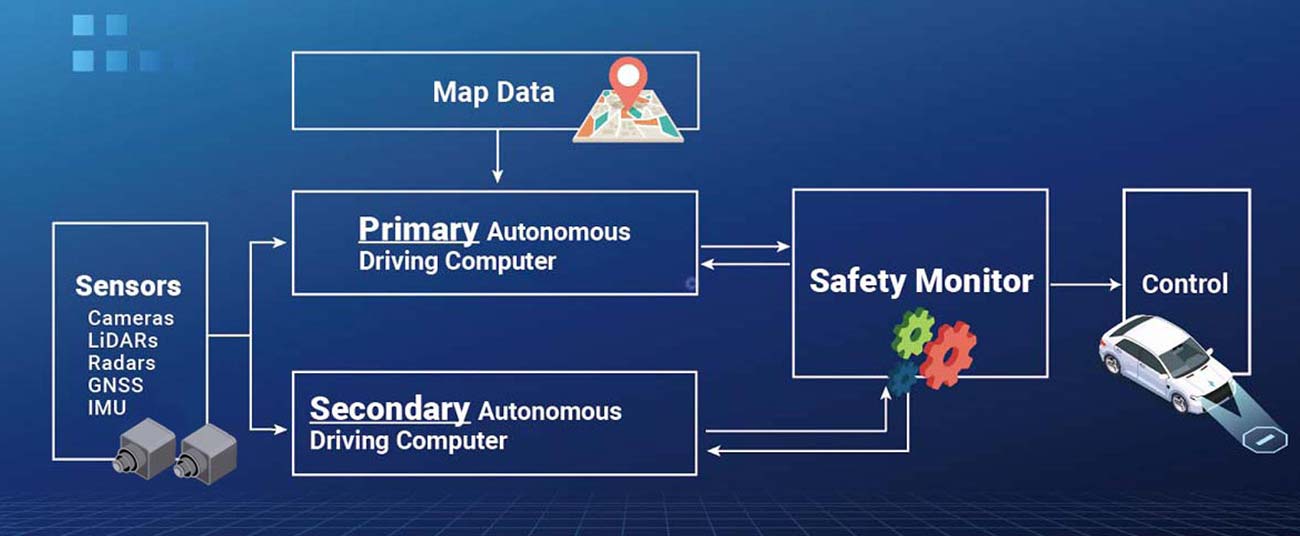
The systems must provide enough connectivity for cameras, sensors, LiDARs, radar, GNSS. The system would also be required to monitor e-shuttle’s onboard statuses for predictive maintenances, such as battery energy, power expenditure, and last but not least, the passengers for safety.
The system would need a computer powerful enough to process imagery data, usually utilizing a powerful GPU for the autonomous vehicle to react or make decisions in real-time.
The vehicle also needs to possess V2X capability to enable the vehicle to connect to wireless networks within the operating area. It is essential in this application as it is heavily dependent on wireless data input from surrounding stations and sensors for ahead-of-time information.
And as is with any computer deployed in a vehicle, the computer must endure constant shock and vibration, accept the vehicle's electric power delivery, and need to withstand temperatures in the vehicle, under the weather.
Solution
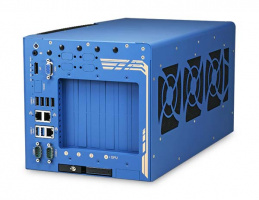
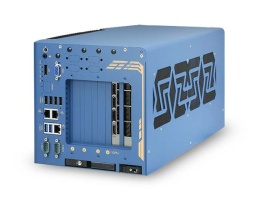
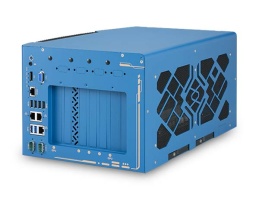
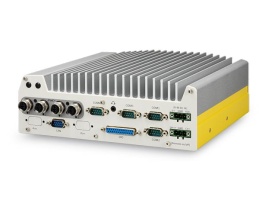
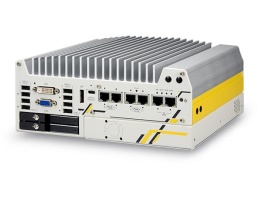
To make this complex vehicle automation work, the system integrator used a Nuvo GC series computer for data fusion analysis and two Nuvo VTC series computers connecting to cameras, LiDARs, sensors in and around the vehicle.
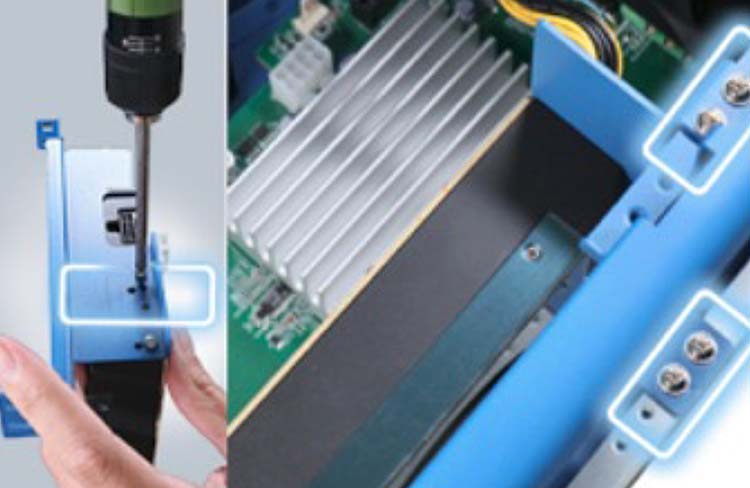
The Nuvo GC series supports up to two NVIDIA® RTX graphics cards to provide superior AI TOPS inference processing power for fusion data analysis. To accommodate in-vehicle applications, the system has dedicated and adjustable GPU brackets that secure the cards in place to withstand constant shock and vibration.
The two Nuvo VTC systems offers plenty of connectivity, such as PoE+, GigE, USB, COM, CAN bus, etc. to connect to all the sensors strategically placed around the vehicle. The systems also feature internal expansion slots for installing WiFi 6/ 5 or 4/5G wireless communication modules, making it the ideal onboard computer system for V2X communications and other autonomous vehicle applications.
The Neousys Nuvo series rugged embedded systems are available in various specifications to suit autonomous vehicle application needs. There are even low-profile versions that are compact in dimension, but do not compromise on performance as they can still install an Intel® Core™ i9 processor and provide optimum performances.
Other standard features of the Neousys Nuvo embedded systems include wide temperature operation, ignition power control, MIL-STD-810G shock and vibration certifications.